
The Manor
Royal Prison to Garden Estate...

(This post was originally issued to paid subscribers in November 2025)
Like much of Sheffield history I feel the story of the Manor area is both known about and somewhat underappreciated in fairly equal measure. I would think most Sheffield folk have heard something about Mary Queen of Scots - but they are probably even more aware of the recent reputation of the Manor Estate, described as the ‘worst in Britain’ in the 1980s. Manor Lodge is a remarkable place; it is like a piece of York has been placed on the edge of a Sheffield housing estate. I do bemoan the loss (or indeed celebrate the survival) of our buildings and remains from the nineteenth century, but here we have surviving remnants that are up to five hundred years old. The area has a long and varied story passing through very different eras of local and national history.
We begin with what Manor Lodge was - why is there such a building there at all? It was built in the early sixteenth century near the centre of the old Sheffield Deer Park (so both Park and Manor are very old area names) as a country retreat and hunting lodge for the Shrewsbury family, the one time historic landowners of the area. There were hundreds of such deer parks around the country, but this was a particularly large and grand example; well over 2,000 acres and with an eight mile circumference. As well as leisure space for the landed gentry the park unsurprisingly provided great natural resources - it was particularly noted for huge trees; some of the largest oaks in the country grew there. The park’s whole area began near the present day canal basin and extended out across the whole of present day Norfolk Park and Manor.
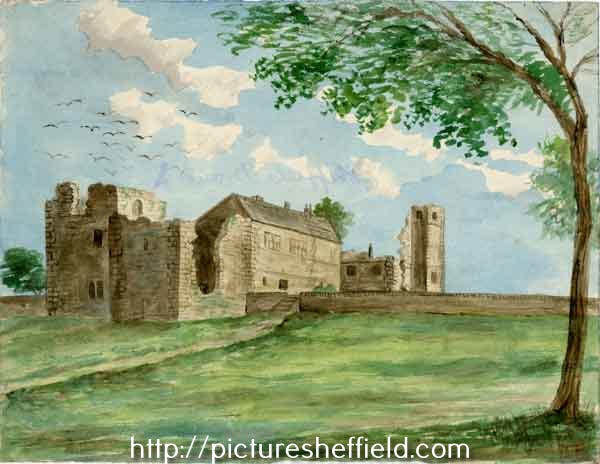
Manor Lodge sketched by John Holland Bramall in the 1840s
The story of Manor Lodge (and The Manor area now) doesn’t begin with Mary Stuart, Mary Queen of Scots - but the story brought a national situation to Sheffield. This was the time of bloody religious conflict in Europe and at home, and Mary was seen as a figurehead for Catholics. Soon after she came to England she was given over to the custody of the 6th Earl of Shrewsbury, and for the rest of her life kept captive in several different places, including for much of the time at Manor Lodge and Sheffield Castle. Calling the Lodge a prison would be unfair to the common prisoners of the era; this was very comfortable living - however her freedom of movement was taken away. It is said that Mary was still able to plot against her rival, Elizabeth I, as she was allowed to receive visitors. Mary was executed in 1587, an event witnessed by the 6th Earl of Shrewsbury amongst others.
Manor Lodge had a relatively short heyday, and within a century of being built it was not being used very much (likely its landed owners had preferred places to stay). Like much of the old town it passed into the ownership of the Dukes of Norfolk, but the decline continued and it was largely broken up, and in 1706 much of the structure was demolished. Likewise the old Deer Park was by then much smaller than at its peak, and the area began to become home to small farms and coal mines among the fields. There was a small colliery in the grounds of the Lodge; Manor Castle pit, and nearby Manor Wood pit and Manor (or sometimes Low Manor) pit. On the map of the area below we can also see Crab Tree Farm, Low Farm, Park Farm, and Nunnery Farm.
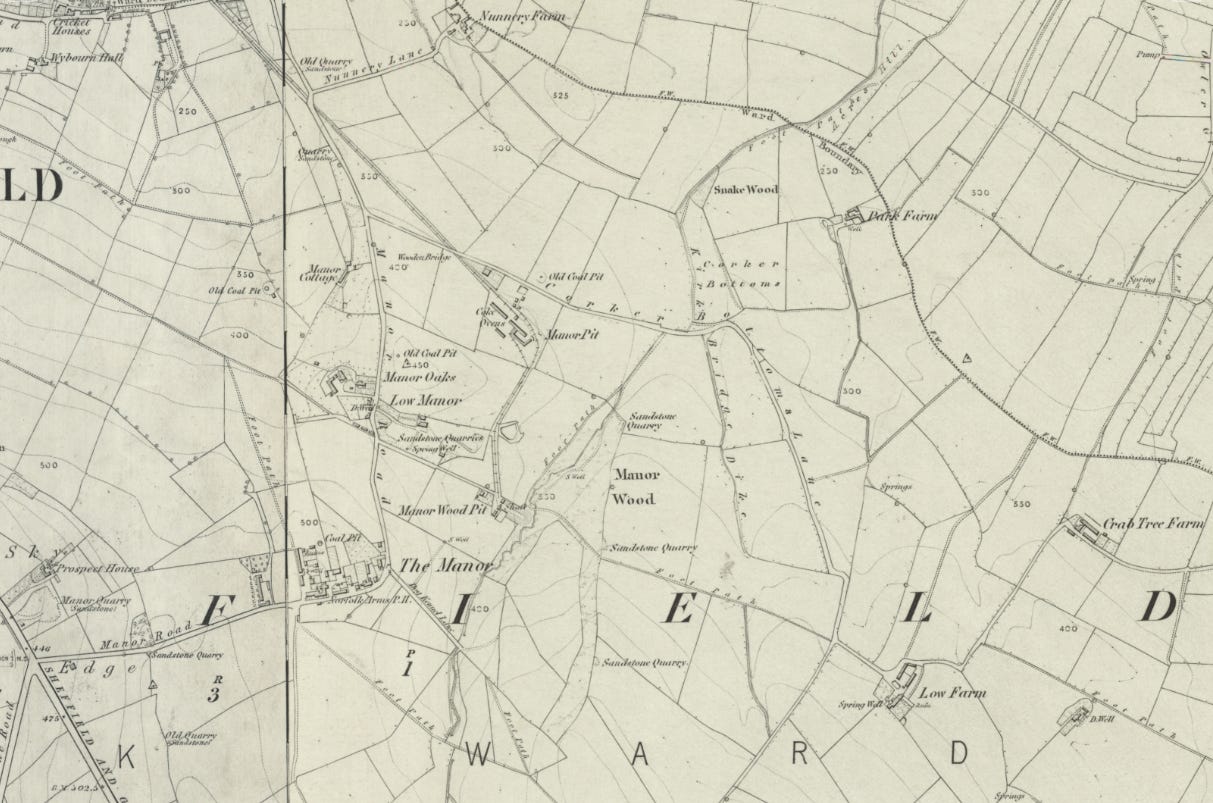
The coal pits and farms of The Manor in 1855
In the bottom left of the map is Manor Road, now Manor Lane, which is a very old route. Another well known road that has a long history is City Road, which just about sneaks into frame as the Sheffield and Gander Lane turnpike. That road dates from the 1770s and is another venerable main route in and out of Sheffield. It was then named Intake Road until Sheffield was awarded city status in 1893, when City Road became another new name to mark the occasion. When still called Intake Road a new cemetery was opened there in 1881, later better known as City Road Cemetery - the land was purchased from the Duke of Norfolk, and the grand entrance remains a landmark. However I’m going to illustrate it with one of several original ‘Sheffield Burial Board’ (SBB) drain covers that pleasingly survive in the grounds.
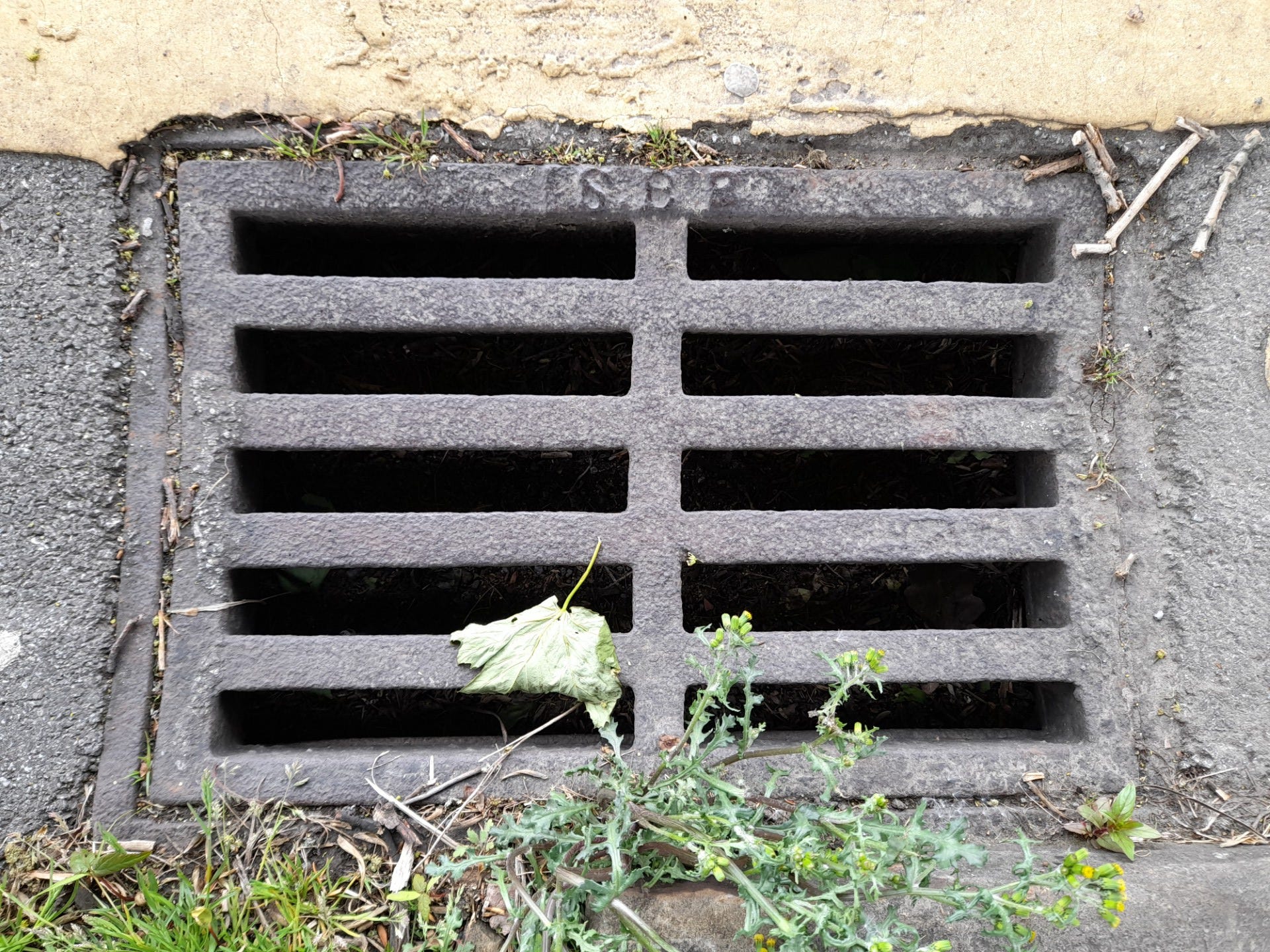
Original Sheffield Burial Board cover, City Road Cemetery
City Road forms one boundary of The Manor, with the more modern Prince of Wales Road forming another. This road has a different background, only being constructed in 1920/21 and linking Darnall with Manor Top and Intake. The building of Prince of Wales Road was an unemployment relief programme, as was Rivelin Valley Road a few years earlier. Now the road runs through housing and in places helps separate the Manor estate from Bowden Housteads Wood on the other side, but when it was built it was across the open fields we saw on the 1855 map. The map below, from 1921, is interesting - we can see that the road was built from the Darnall end starting from the earlier Owlergreave Road, and has not yet been completed. It also passes very close to Manor Farm and Crabtree Farm, and would certainly have been a very different scene to the one we see now.
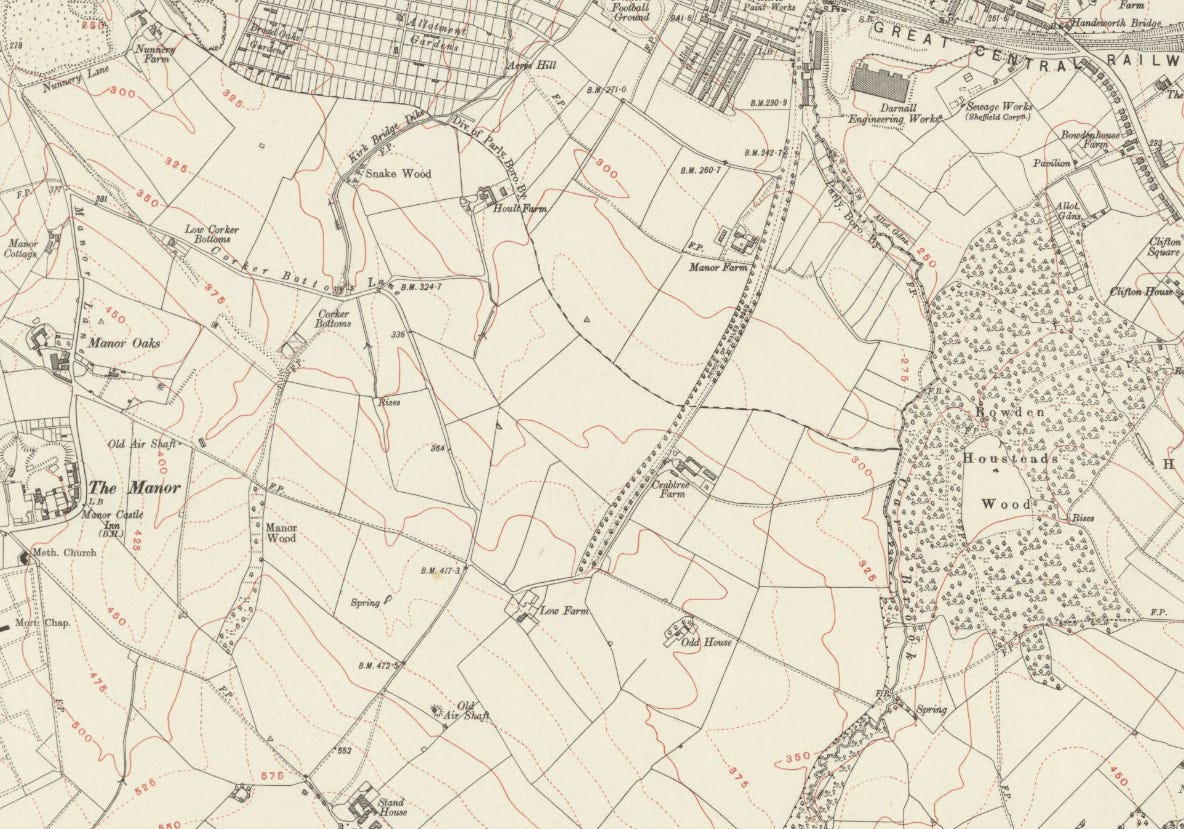
Prince of Wales Road under construction on the 1921 map
Shortly after the completion of Prince of Wales Road the area began to change from a rural edge of the old town to becoming heavily built-up. The 1920s and 30s saw huge estate building in Sheffield in response to the population growing by around 100,000 since 1900; Parson Cross, Wisewood, and Arbourthorne amongst them - and earlier than those in being constructed from 1924 onwards, the Manor Estate. What stands out from the plans and early photos is the still isolated position of the original estate - it wasn’t an extension of an existing suburb, but placed in the middle of an open area. The other striking thing is the layout of the estate, with circles within the overall shape, and large spaces between houses and streets. The Sheffield estates of the time were built with decent sized gardens and green spaces - many families would have moved here from the inner-city courts and back-to-backs, and The Manor would have been a garden estate in comparison.
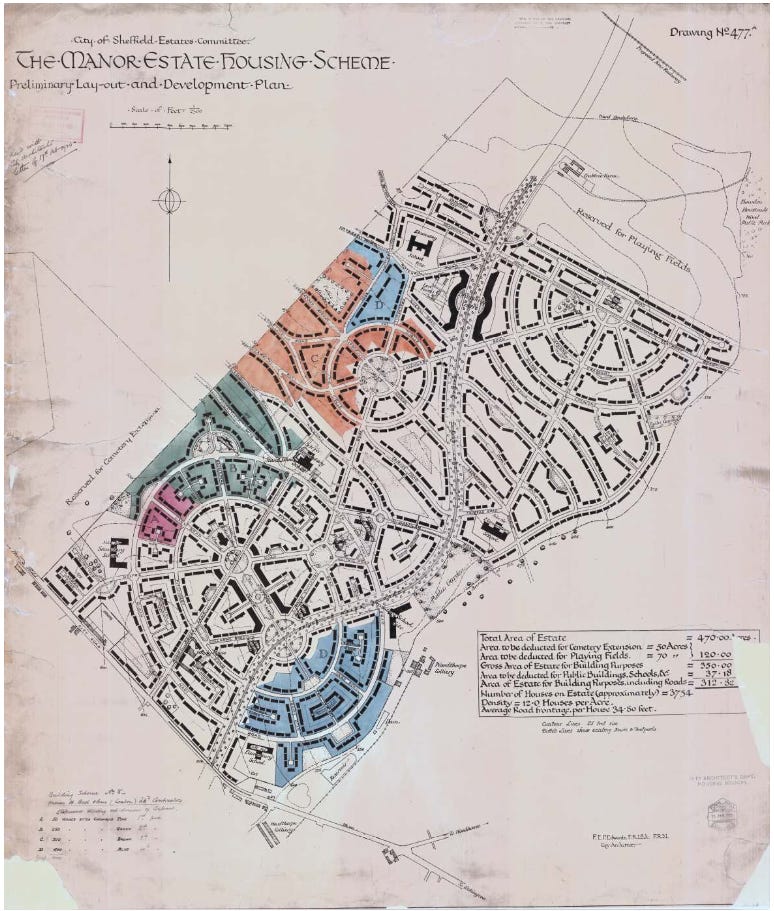
The preliminary plans for the new Manor Estate in 1924
The plan above for over 3,000 homes was completed in 1927, and at its peak in the following decade over 30,000 people lived on The Manor. However this was only to be the first half of development in the area we know today. Sometimes boundaries of areas in Sheffield can move around, or be difficult to define, but this one has sharp edges - Manor Lane and City Road are centuries old, with Prince of Wales Road and the parkway enclosing from the other two sides. The rest of the area within these four roads, forming what we know as the Manor estate, was built after the war. Manor Park was a separate development, filling much of the gap between the original estate and the area around Manor Lodge. There had been an earlier community in the area in the nineteenth century, when miners and their families lived in makeshift homes within the Lodge itself, structures built up against the old walls of the once grand property.
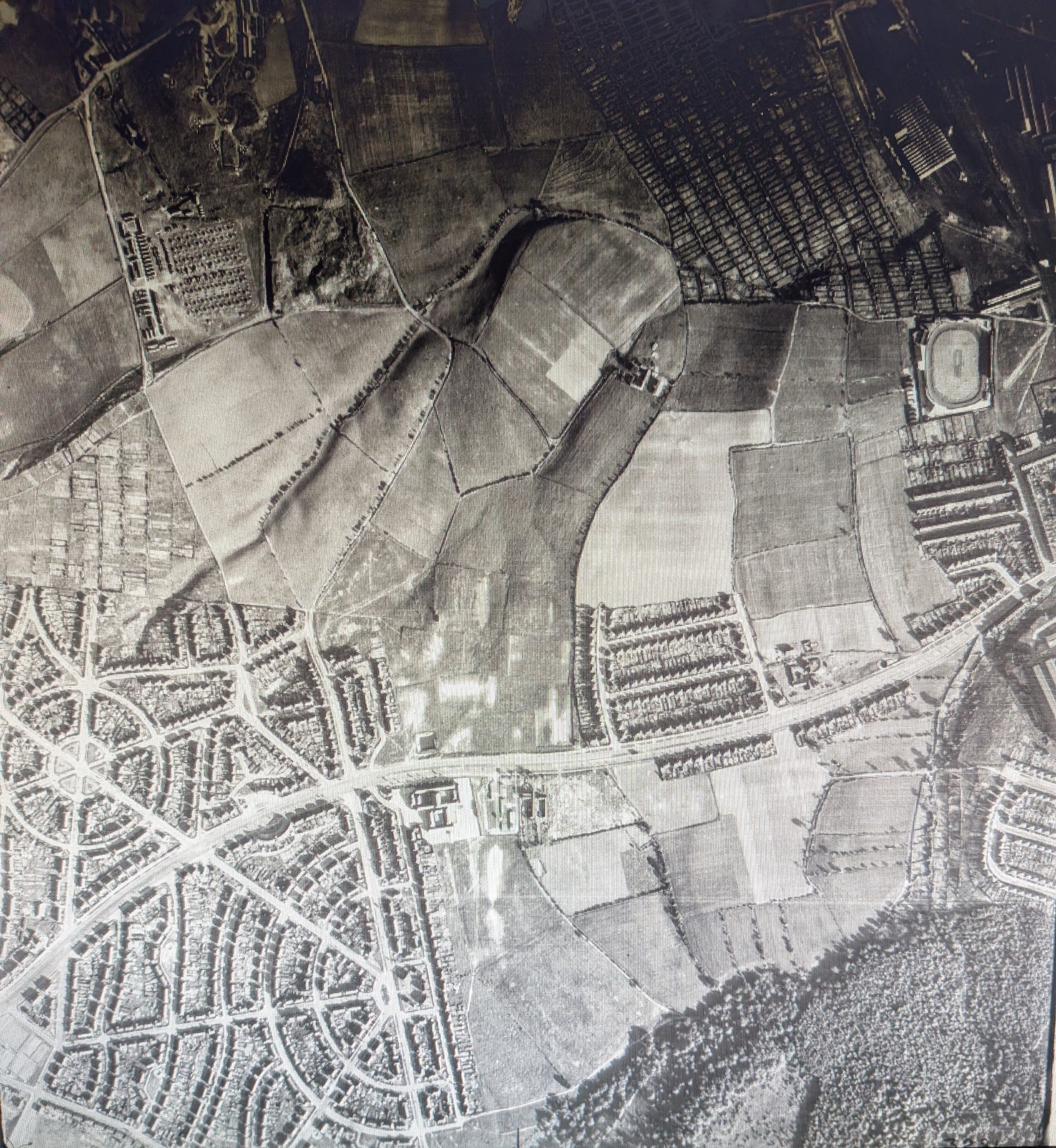
Manor Estate with the soon to be developed area in 1945 (credit: Historic England)
In more recent years the estate was synonymous with poverty, and sometimes violent crime. In the late 80s there was an early ‘fly on the wall’ television documentary called ‘On The Manor’ (which is available online), and in 1995 the one time Sheffield councillor, and former Deputy Labour Leader, Roy Hattersley called the estate ‘the worst in Britain’ after an arson attack on a local school. It wasn’t alone in having a bad reputation during times of high unemployment and deprivation, either locally or nationally, but when I came to Sheffield in 2004 I lived there for a while and the very word ‘Manor’ still received looks and comments. However there is no doubt that this reputation is now history too - I visit quite regularly and it is a very different place to twenty years ago, let alone thirty or forty.
The area has a number of nice historical references in some rather unusual street names. Having a history covering half a millennia it goes back even further with ‘Waltheof’ appearing in a road name and a school. He was Earl of Northumbria, but also Lord of Hallamshire and is reputed to have had a Hall built in Sheffield in the eleventh century. There is Queen Mary Road, Wulfric Road (after a Saxon Lord), Babington Crescent (after a Catholic supporter of Mary who attempted a rebellion and was executed), Fairfax Road (after a English Civil War commander), Hastilar Road (one of several on the estate with historic connections to Eckington) and more. I have recently observed that we too often don’t know the origins of our street names, but these are easier to identify!
This is a short version of a very long story, and of the changing use of land over the centuries. It may appear ironic that the sometimes shocking media stories from the 80s and 90s were about roads named after historical nobility - although maybe not given that plenty of them had each other killed over their differences. The falling from fashion of Manor Lodge in the 1600s may be reflected in the decline of the Manor Estate - people were queuing up to live in the garden estate of the 1920s and 30s, and some may have remained to see the many issues in the 1980s. Sometimes I do think about the huge amount of house building of that inter-war era. It was necessary and needed, but it was also on green land - something that is controversial today. The city had rapidly grown in numbers, but also in area. The one-time playground of nobility became a healthy green space for ordinary folk to live, and while undoubtedly having had its problems is now returning nearer to the vision of a century ago.
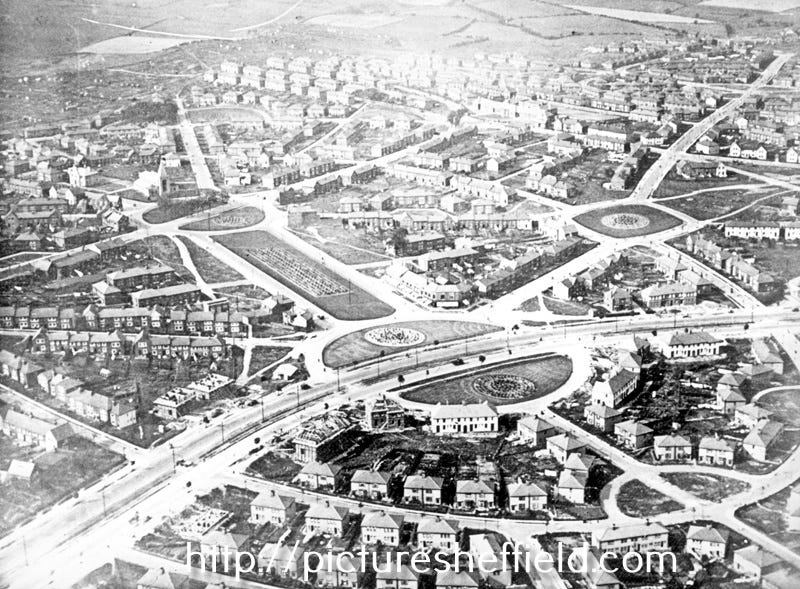
The houses and open spaces of the Manor Estate shortly after construction